Aug. 7, 2026: Wildfire Smoke Air Quality Update
Posted on August 07, 2026

The current air quality across Missoula County is Unhealthy for Everyone (red AQI) with some areas of Unhealth for Sensitive Groups. See current air quality conditions at Fire.AirNow.Gov.
It’s already Friday and I know you’re looking at the EPA Fire & Smoke Map to see where the smoke is not for weekend plans. Unfortunately, wildfire smoke is impacting all western Montana and everywhere west of us until you get to the coast. Our saving grace (aka Good to Moderate air quality): the northern band of the state to the east of Glacier National Park and most of eastern Montana.
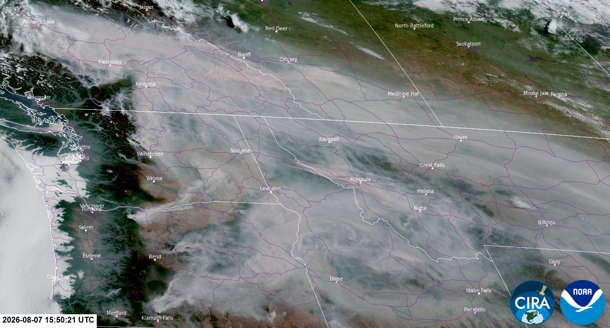
GOES West Satellite imagery from this morning
Wildfire smoke from Washington and Oregon continues and will continue to fill our skies with heavy smoke. Fires across the west were very active yesterday afternoon covering western Oregon, western Washington, Idaho, and western Montana with smoke. Check out regional fire information at Inciweb.wildfire.gov.
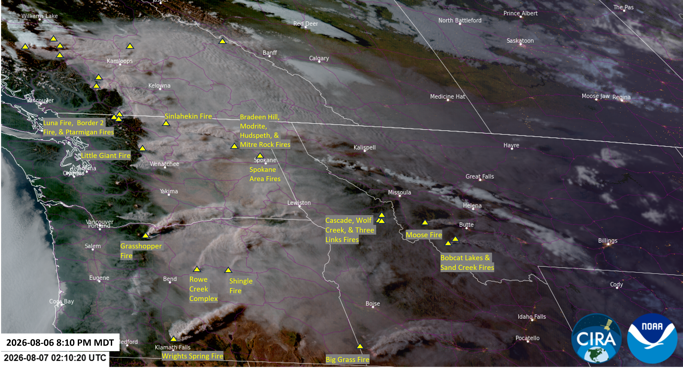
GOES West Satellite imagery from last night
Several local fires also exhibited active behavior yesterday. As the Cascade, Wolf Creek, and Three Links Fires west of Hamilton in the Selway-Bitterroot Wilderness continue to grow, smoke will impact those in the Bitterroot and Missoula valleys, especially in the evenings and mornings. Overnight, the cool air draining down from the mountains into valley bottoms will be full of wildfire smoke. That smoke will settle and worsen air quality. Once the sun rises and heats the bottom of the valleys, inversions will begin to break, and the smoke will lift and mix with the rest of the atmosphere.
You can see this happening when you look at the hourly AQI data:
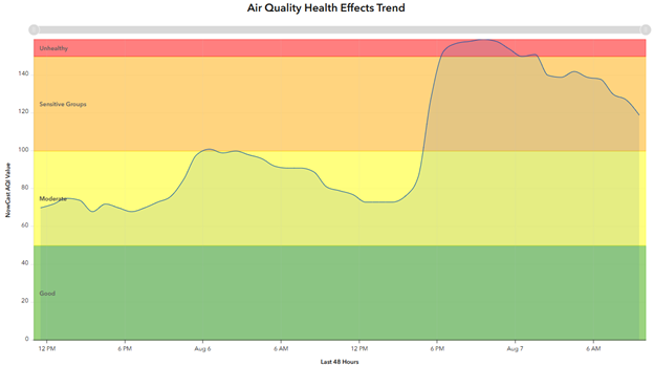
Air quality data from the Missoula's Boyd Park monitor from Today’s Air.
When the Air Quality Index is Red or Unhealthy for Everyone, everyone should shorten and reduce the intensity of any outdoor activities and take steps to limit your smoke exposure. Sensitive groups should avoid long or intense outdoor activities and limit time spent outdoors and move activities to a clean indoor air space. Everyone will likely experience symptoms of short-term exposure to wildfire smoke such as coughing, wheezing, shortness of breath, fatigue, respiratory irritation, and congestion. People with asthma should follow their asthma action plan and keep quick relief medicine handy. People with heart or lung disease should contact their health provider if experiencing symptoms associated with smoke exposure.
To help limit those negative health effects from the smoke that I know we’re all starting to notice, use portable air cleaners with a HEPA filter (NWE rebate) in your home to clean your indoor air. Pick up an N95 or KN95 to don for less strenuous outdoor activities and run your car air on recirculate. You can even get a mini HEPA air cleaner for your car if you’re spending a decent amount of time in there.